

What Language Is Spoken in Austria? A Complete Guide
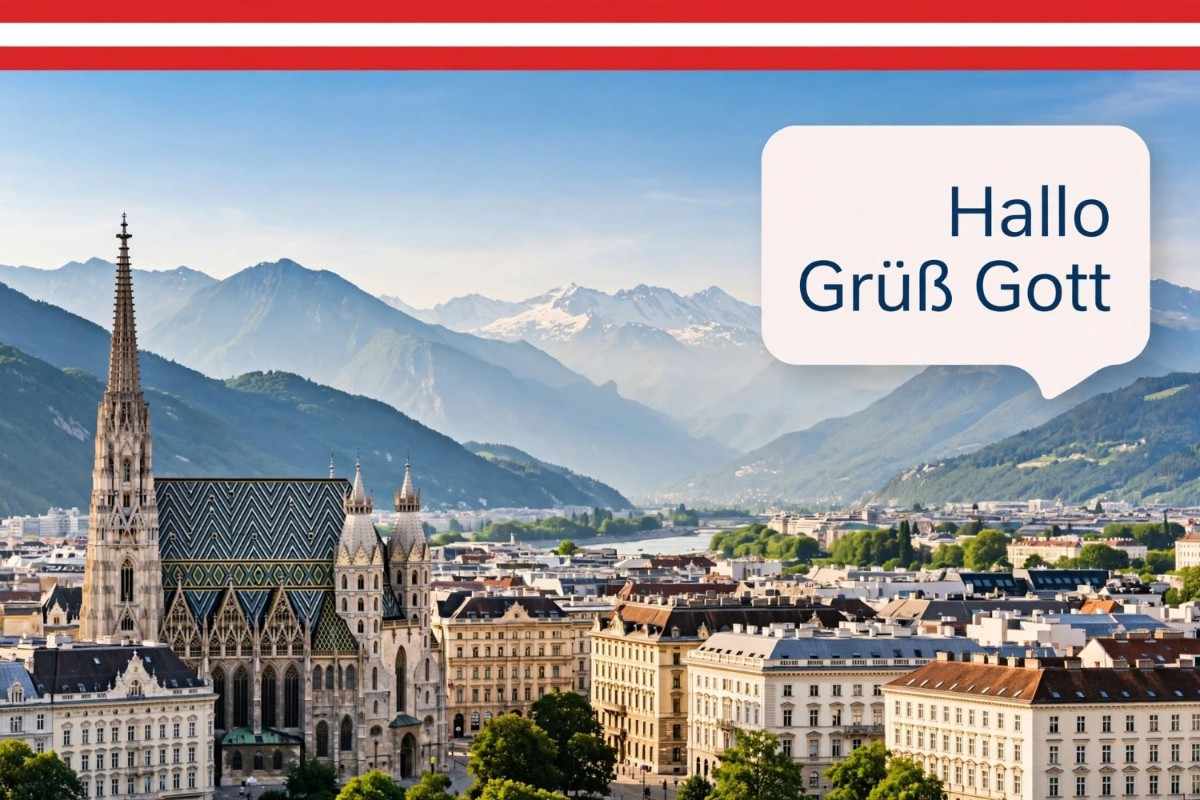
What language is spoken in Austria? The answer is German, the country’s sole official language at the federal level. Roughly 88% of the population speaks German as a first language, making it the dominant language across every region, from Vienna in the east to Vorarlberg in the west.
How Many People Speak German in Austria
According to Statistics Austria, the country’s official statistics agency, Austria’s population passed 9.2 million at the start of 2026, with roughly one fifth holding non-Austrian citizenship, concentrated most heavily in Vienna. German remains the language used in schools, government, media, and daily life nationwide, even as the population grows more diverse.
What Language Is Spoken in Austria: Austrian German vs. Standard German
The answer to what language is spoken in Austria isn’t quite as simple as “German” alone. Austrian German (Österreichisches Deutsch) has its own standardized vocabulary, particularly for food, government terms, and everyday objects. A few well-known examples: Austrians say “Erdäpfel” instead of “Kartoffel” for potato, “Sackerl” instead of “Tüte” for bag, and “Jänner” instead of “Januar” for January. These differences are documented in the Österreichisches Wörterbuch, the official dictionary of Austrian German, and are taught in Austrian schools the same way British and American English differ.
Pronunciation also varies noticeably. Austrian German tends to have softer consonants and distinct vowel sounds compared to the Standard German used in northern Germany, closer in some ways to Bavarian German just across the border.
Regional Dialects Across the Country
Beyond the standardized version, dialects vary a great deal by region:
- Viennese German (Wienerisch) – spoken in and around the capital, known for its distinct slang and rhythm
- Tyrolean dialect – common in Tyrol, heavily influenced by Alpine German varieties
- Carinthian dialect – spoken in Carinthia, with some Slovenian influence near the border
- Vorarlberg dialect (Vorarlbergisch) – closer to Alemannic German, spoken in Austria’s westernmost state
These dialects can be strong enough that Austrians from different regions sometimes struggle to understand each other in casual conversation, even though everyone learns and uses Standard Austrian German in schools, media, and official settings.
Minority and Recognized Languages
While German dominates, Austria officially recognizes several minority languages in specific regions under constitutional protection: Croatian and Hungarian in Burgenland, and Slovenian in parts of Carinthia. These are used in local schools, signage, and some administrative contexts in the municipalities where those communities are concentrated.
Do Austrians Speak English
English proficiency in Austria is high, especially in Vienna and among younger generations. Austria regularly ranks among the top non-native English-speaking countries globally. Most people working in tourism, hospitality, and international business speak English comfortably, though German remains essential for daily life, government paperwork, and building deeper local relationships, something covered in more detail in our guide to working in Austria.
FAQ: What Language Is Spoken in Austria
Is German the only official language? At the federal level, yes. Croatian, Hungarian, and Slovenian have regional recognition in specific municipalities.
Do I need German to move to Austria? For most visas and residency permits, yes, proficiency requirements typically range from A1 to B1, detailed in our Austria visa guide.
Is Austrian German hard to learn if I already know German? Not particularly, most differences are vocabulary-based rather than grammatical, so existing German learners adapt quickly.
What’s the difference between Austrian German and Swiss German? Both differ from Standard German, but Swiss German dialects are generally considered harder for Standard German speakers to understand than Austrian dialects are.