


Austria Residency Permit Guide 2026: Types, Costs & How to Apply
A Schengen or national visa only gets you through the door. The moment a stay in Austria runs past six months, whether for work, family, retirement, or simply the freedom to live without local employment, the visa system stops applying entirely and a completely different process takes over: the residence permit (Aufenthaltstitel). This guide walks through every major permit type available in 2026, what each one costs to qualify for, and how the application actually works.
Who Needs a Residence Permit
Anyone who isn’t an EU, EEA, or Swiss citizen and wants to stay in Austria longer than six months needs a residence permit rather than a visa. Even EU citizens technically need to register their residence with the authorities after three months, though the process is far lighter than for third-country nationals. The permit system is built around why someone is staying, not just how long, and that distinction decides which of the following categories applies.
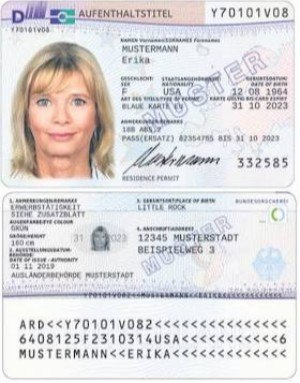
The Main Permit Types in 2026
Red-White-Red Card. Austria’s flagship points-based work permit for non-EU nationals, split into several sub-categories: skilled workers in shortage occupations, “Other Key Workers” (requiring a gross minimum salary of €3,465/month in 2026), self-employed key workers (requiring roughly €100,000 in financing), and start-up founders (requiring at least €30,000 in capital plus 50 percent equity in the venture, alongside a points threshold). Applicants need to clear a points system based on qualifications, work experience, age, and language skills.
Red-White-Red Card Plus. Issued after two years on certain permits, granting unlimited labour market access, not tied to a specific employer or job offer. It’s also the route for spouses and family members of existing RWR Card, Blue Card, or long-term EU resident holders.
EU Blue Card. For highly qualified employment with a specific salary floor, set at roughly €55,678 gross per year in 2026. Unlike the Red-White-Red Card, there’s no points system, but the employer’s job offer must clear a labour market test showing no equally qualified candidate is available through Austria’s public employment service.
Settlement Permit (Niederlassungsbewilligung). A broader category covering people settling in Austria without being tied to a specific job. Sub-types include the Settlement Permit for family members without independent gainful employment, permits for researchers and artists, and niche categories like pastoral workers. This is the path most commonly used by financially independent retirees or remote workers who won’t be employed inside Austria.
Family Reunification Permits. For spouses, registered partners, and children joining a sponsor who already holds residency or citizenship in Austria. Spouses typically need to demonstrate basic A1 German before entry unless an exemption applies.
ICT and Mobile ICT Permits. For intra-company transfers, where an internationally active company with an Austrian branch relocates staff internally.
Researcher Permits. Covering scientific researchers hosted by an approved research institution, including a “mobility” variant for researchers already based in another EU state.
Job Seeker Visa. A 6-month visa allowing highly qualified individuals to search for employment in Austria in person, which can convert into a Red-White-Red Card once a job offer is secured.
Cross-Border Commuter Permit. A newer category introduced in December 2025 for non-EU nationals who live in a neighboring EU country and commute to work in Austria’s border regions.
Income and Financial Requirements
Financial thresholds vary sharply depending on which permit is being applied for. Work-tied permits like the Red-White-Red Card and EU Blue Card are governed by their own salary floors described above, while permits not tied to employment, such as the settlement permit for financially independent residents, are assessed against Austria’s minimum subsistence rates. For 2026, that baseline sits at roughly €1,308.93 per month for a single applicant and €2,064.12 for a couple, plus about €201.88 per child, after housing costs are accounted for. Applicants relying on savings, pensions, or passive income rather than salary generally need to show a higher buffer than these baseline figures. For the full breakdown of how this is calculated and documented, see our dedicated income requirement guide.
It’s also worth budgeting for daily living costs before applying, since immigration authorities want to see the numbers hold up in practice, not just on paper. Our complete 2026 expat cost of living guide breaks down realistic monthly budgets across Austria’s main cities. It’s worth noting that income requirements for a permit are a separate test from Austrian tax residency; our Austria tax guide explains when tax obligations actually begin, since the two often get confused.
Health Insurance and Language Requirements
Every residence permit requires proof of health insurance covering all risks in Austria; public social insurance coverage through employment is generally sufficient on its own. Language requirements depend on the permit type: work permits like the Red-White-Red Card and Blue Card typically don’t require German at the application stage, but most permit holders must meet Module 1 of Austria’s Integration Agreement, generally reaching A2 German within two years of arrival, to keep renewing smoothly and to qualify for the longer three-year permit validity.
How to Apply
Applications are generally filed either at the Austrian embassy or consulate in the applicant’s home country before travel, or directly with the competent residence authority inside Austria if the applicant already holds a valid visa or qualifies for visa-free entry. In Vienna, that authority is MA 35 (Municipal Department 35, Immigration and Citizenship), which requires appointments booked in advance for both first applications and renewals. Elsewhere in Austria, applications go through the relevant district administration or state government office.
Renewals need to be filed before the current permit expires, but no earlier than three months before that date. Missing the window can force a person to leave Austria and re-enter before a new permit is issued, so this deadline matters more than almost any other detail in the process.
From Residence Permit to Long-Term Status
Permits held continuously for two years under the Integration Agreement’s Module 1 can extend to a three-year validity on renewal. After five years of continuous legal residence, most permit holders become eligible for EU long-term resident status, which carries more security and mobility rights across the EU. Ten years of residence, alongside B1-level German and a citizenship test, opens the door to Austrian citizenship itself; our full Austria citizenship guide covers naturalization requirements, faster pathways, and costs in detail.
For those planning to stay in Austria long-term, it’s also worth understanding how the Austrian pension system works, since years spent here can count toward eventual retirement eligibility.
Frequently Asked Questions
Can I apply for a residence permit after I arrive in Austria on a visa?
Only in specific circumstances, generally if you already hold a valid visa or qualify for visa-free entry. Most first-time applicants apply through an Austrian embassy or consulate before traveling.
Do I need a job offer to get a residence permit?
Not necessarily. Work-tied permits like the Red-White-Red Card and EU Blue Card require one, but settlement permits for financially independent applicants and most family reunification permits don’t.
How long does the application take?
Timelines vary by permit type and authority workload; applying well before your visa or current permit expires, and well ahead of any planned move, is the safest approach.
What happens if my permit expires before I renew it?
You may be required to leave Austria and re-enter lawfully before a new permit can be issued, so renewal applications should always go in with time to spare, not at the last minute.
For the definitive, current requirements for your specific situation, always check against Austria’s official immigration portal, since income thresholds and salary floors are adjusted annually.