

Republic of Austria: Complete Country Guide 2026
The Republic of Austria is a landlocked country in the heart of Central Europe, known for its Alpine landscapes, imperial history, and status as one of the world’s most livable nations. This guide covers everything from where Austria is located to its government, geography, economy, and culture.
Where Is Austria Located
Austria sits in Central Europe, bordered by Germany and the Czech Republic to the north, Slovakia and Hungary to the east, Slovenia and Italy to the south, and Switzerland and Liechtenstein to the west. It’s a landlocked country with no direct sea access, positioned almost exactly between Western and Eastern Europe, which historically made it a crossroads between the two.
Republic of Austria: Fast Facts
- Official name: Republic of Austria (Republik Österreich)
- Capital: Vienna
- Population: Approximately 9.2 million (2026)
- Currency: Euro (EUR)
- Official language: German
- Area: 83,879 square kilometers
- Government: Federal parliamentary republic
- Head of state: President (largely ceremonial role)
- Head of government: Chancellor
- National Day: October 26
- Major mountains: The Austrian Alps, including Grossglockner (3,798m, the highest point)
- Major rivers: Danube, Mur, Inn, Salzach
How the Republic of Austria Is Governed
Austria is a federal parliamentary republic made up of nine states: Vienna, Lower Austria, Upper Austria, Styria, Tyrol, Carinthia, Salzburg, Burgenland, and Vorarlberg (see our complete guide to Austria’s states, districts, and cities for a full regional breakdown).
The president is elected by popular vote for a six-year term and serves a largely ceremonial function, while day-to-day governance falls to the chancellor and federal government, which answers to the National Council, the 183-member lower house of parliament elected by proportional representation. The upper house, the Federal Council, has 62 members appointed by the state parliaments.
Austria declared permanent neutrality in 1955, meaning it doesn’t join military alliances, though it remains an active member of the European Union and United Nations and regularly participates in international peacekeeping efforts.
Geography of the Republic of Austria
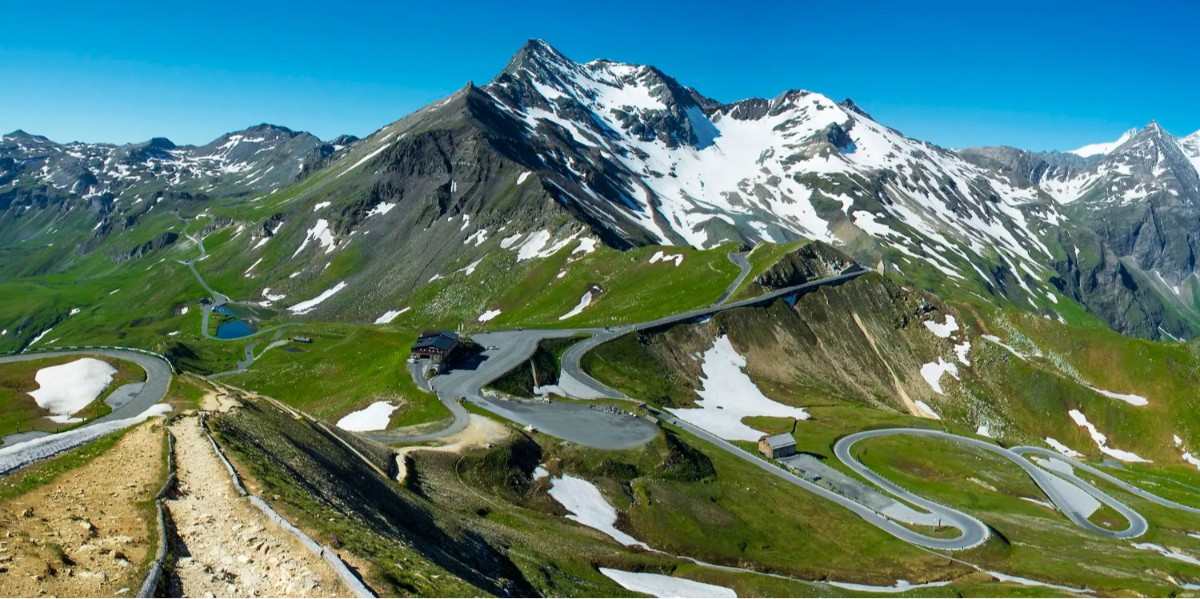
The Eastern Alps cover roughly two-thirds of Austria’s territory, giving the country its mountainous, ski-resort-heavy character. Beyond the Alps, Austria has a temperate continental climate, warm summers, cold winters, and notably wetter conditions in the west than the east. The Danube, Austria’s longest river, cuts through the northeastern part of the country and past Vienna itself.
The Austrian Economy
Austria runs a highly developed social market economy and consistently ranks among the wealthier countries in the world by standard of living. Key industries include machinery and equipment, food production, and chemicals, alongside globally recognized exports like Swarovski crystal. Tourism remains a major economic driver, drawing tens of millions of visitors annually to destinations like Vienna, Salzburg, Hallstatt, and the Alpine ski regions. As an EU member, the bloc is Austria’s most important trading partner.
A Brief History of the Republic of Austria
Austria’s modern history begins with the Habsburg dynasty, which ruled the region for roughly six centuries starting in 1278. The Republic of Austria itself was formally established in 1918, after the collapse of the Austro-Hungarian Empire following World War I. Austria was annexed by Nazi Germany in 1938, occupied by Allied forces after World War II, and regained full independence in 1955, a milestone tied directly to the neutrality declaration that still shapes its foreign policy today.
Culture, Language, and Daily Life
German is the country’s official language, though the exact dialects and vocabulary vary by region, covered in detail in our guide to what language is spoken in Austria. Austria’s cultural output runs deep: Mozart, Beethoven, Haydn, and Schubert all lived and worked here, Vienna carries the nickname “City of Music,” and artists like Gustav Klimt and Egon Schiele shaped Austrian visual art. The national flag, its meaning, and history are covered separately in our guide to the flag of Austria.
Popular Places to Visit in the Republic of Austria
- Vienna – Hofburg Palace, St. Stephen’s Cathedral, Schönbrunn Palace
- Salzburg – Mozart’s birthplace, Hohensalzburg Fortress
- Hallstatt – lakeside village with salt mines and Alpine views
- Innsbruck – Alpine city known for skiing and the Bergisel Ski Jump
- The Danube Valley – Krems, Dürnstein, and Melk Abbey
FAQ: Republic of Austria
Is Austria part of Germany? No. Austria is an independent country and has been since long before modern Germany existed, though both share German as an official language.
Is Austria in the EU? Yes, Austria has been a European Union member since 1995.
What’s the difference between Austria and Austria-Hungary? Austria-Hungary was a historical empire that dissolved in 1918. The modern Republic of Austria was established from its collapse.
What is the official name of Austria?
The country’s official name is the Republic of Austria (Republik Österreich in German).
What is the old name of Austria?
The name traces back to “Ostarrîchi,” first recorded in 996 AD, meaning “eastern realm.” Before becoming a republic, the territory existed as the Duchy of Austria under Habsburg rule, then as part of the Austro-Hungarian Empire until 1918.
What country did Austria used to be?
Modern Austria emerged from the Austro-Hungarian Empire, which dissolved in 1918 after World War I. Before that, it was ruled for centuries by the Habsburg dynasty as a duchy and later an empire in its own right.
Are Austrians considered German?
No. Austrians and Germans share a language, but Austria has been an independent country since long before unified Germany existed, and Austrians generally maintain a distinct national identity.
Is Austria an ally of Russia?
Austria isn’t a formal military ally of any country. It has maintained constitutional neutrality since 1955, meaning it doesn’t join military alliances like NATO. As of August 2025, Austria’s government reaffirmed it has no plans to pursue NATO membership, though the topic has drawn renewed domestic debate since Russia’s invasion of Ukraine.
Is Austria a rich country in Europe?
Yes. Austria consistently ranks among Europe’s wealthier nations, with a high GDP per capita, low unemployment, and a strong social market economy built on manufacturing, services, and tourism.