


Flag of Austria: Meaning, History & Design Explained
The flag of Austria is one of the simplest national flag designs in the world, and also one of the oldest. Three horizontal bands, red on top, white in the middle, red on the bottom, have represented the country in some form since the Middle Ages, making the flag of Austria a strong contender for the oldest continuously used national flag design still in use today.
What Does the Flag of Austria Look Like
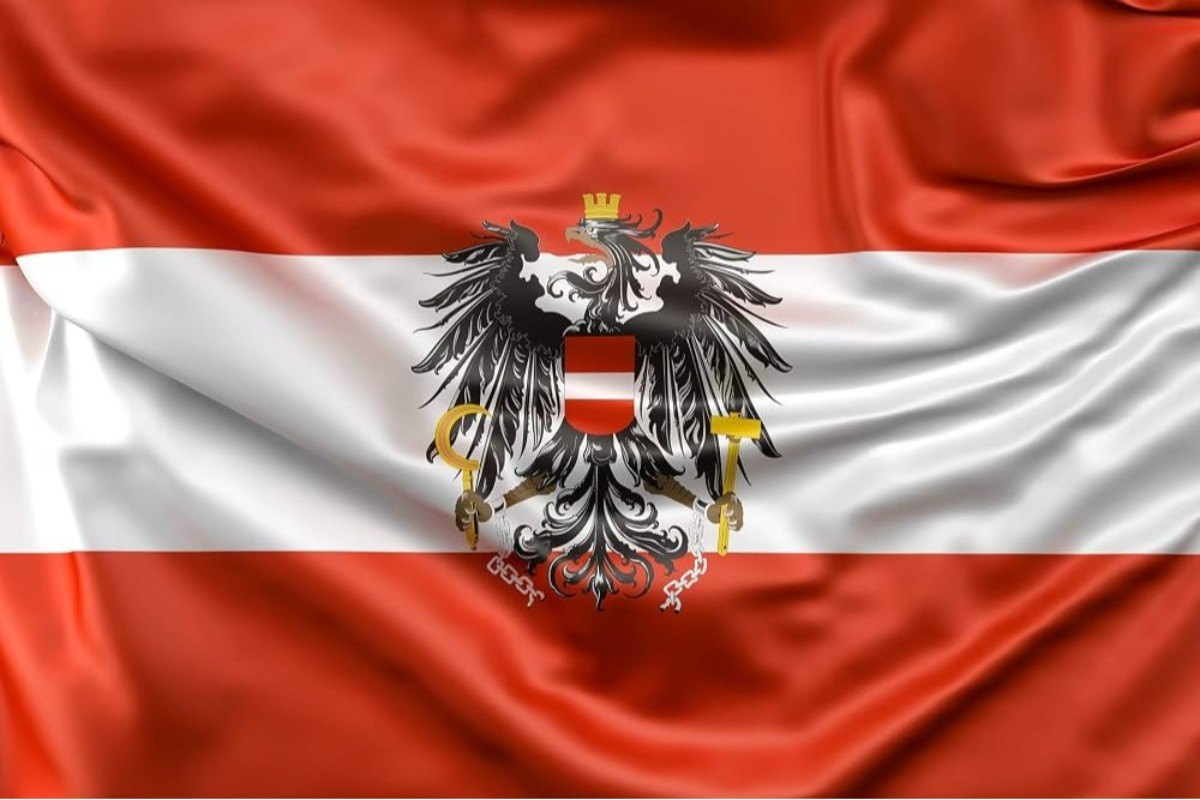
The civil flag of Austria (the version flown by ordinary citizens and businesses) is a plain horizontal tricolor: red, white, red, in equal proportions, with a width to length ratio of 2:3. The state flag, used by government buildings and official bodies, adds the federal coat of arms, a black eagle holding a hammer and sickle, at the center of the white stripe.
Unlike neighbors such as Germany or Hungary, the flag of Austria carries no stars, crests, or additional colors. That restraint is part of what makes it instantly recognizable around the world.
The Legend Behind the Colors
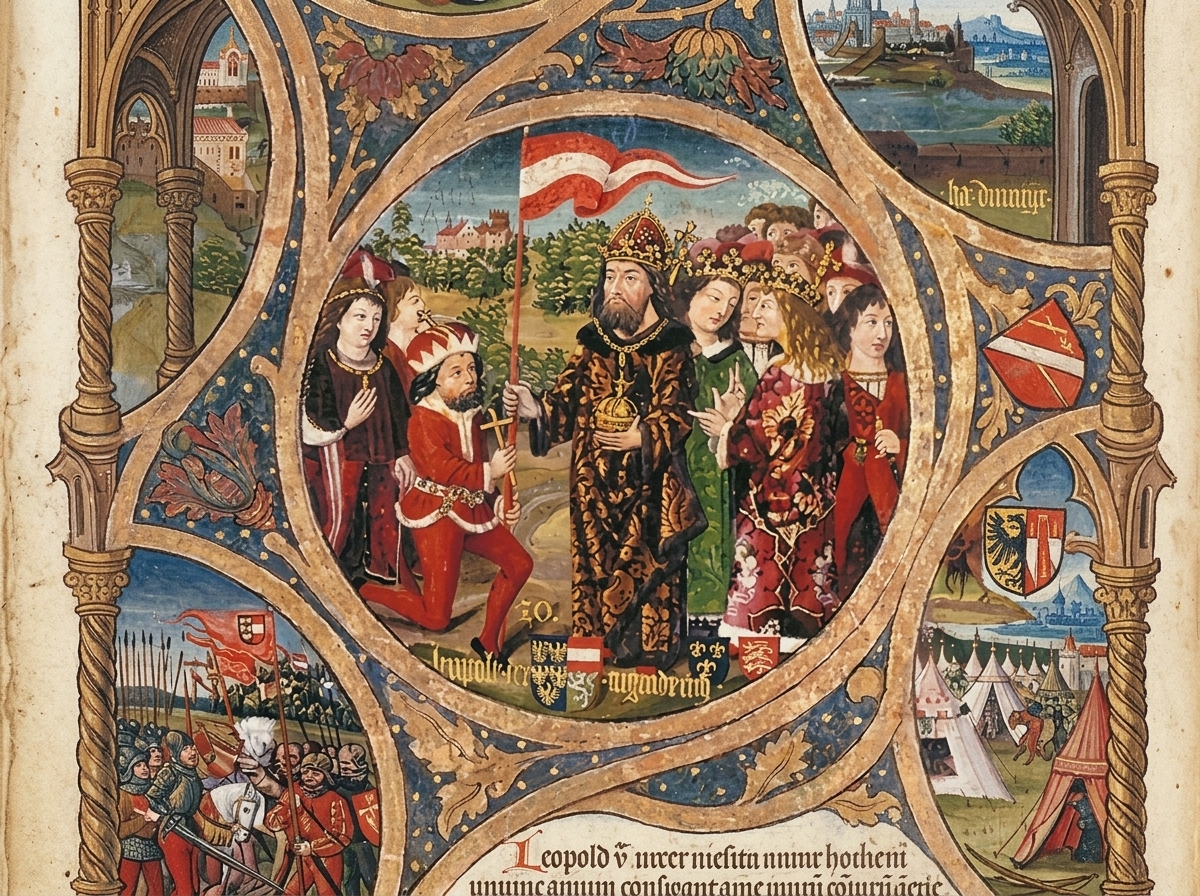
The most widely told origin story dates back to 1191, during the Third Crusade. According to tradition, Duke Leopold V of Austria fought in a battle so fierce that his white tunic became completely soaked in blood. When he removed his wide leather belt at the end of the fighting, a clean white band remained where the belt had been, framed by blood-red cloth above and below it. The red-white-red pattern was reportedly adopted as his personal banner from then on, and later became associated with the Austrian state itself.
Historians are skeptical of the story’s exact details, but the coat of arms it describes is documented as far back as a ducal seal from 1230, which makes the design behind the flag of Austria genuinely medieval in origin, whatever its precise backstory.
From Duchy to Republic
The flag’s history didn’t move in a straight line. It represented the Habsburg duchy and later empire for centuries, was set aside for a time, and was formally reestablished as the flag of Austria’s modern republic in 1918 following the collapse of the Austro-Hungarian Empire. It was raised again after Austria regained full independence in 1955, and it remains the country’s flag today, alongside the Republic of Austria’s broader national identity, including its government, geography, and culture.
Where You’ll See the Flag of Austria
Beyond government buildings, the flag of Austria appears at national holidays like October 26 (National Day), at sporting events where Austrian athletes compete internationally, and on vehicles and uniforms belonging to federal institutions. Private citizens are free to fly the plain civil version at home, and it’s a common sight on balconies and storefronts around National Day and major public celebrations.
Flag of Austria vs. Similar Flags
Because red-white-red tricolors are a common heraldic pattern, the flag of Austria is sometimes confused with others. A few quick distinctions:
- Latvia uses a similar red-white-red pattern, but with a noticeably darker, maroon-toned red and a narrower white band.
- Austria’s state flag (with the eagle) is only used officially. Ordinary citizens and private buildings fly the plain civil flag of Austria instead.
- Regional flags across Austria’s nine states, detailed in our guide to Austria’s states, districts, and cities, each have their own distinct designs, separate from the national flag.
Official Recognition
While Austrian law simply defines the flag’s colors as “red” and “white” without a specified shade, the Austrian Armed Forces’ official flag regulations note that Pantone 186 C is the red used for the coat of arms in military and state contexts, giving the closest thing to an official standard for the flag of Austria.