


Austrian Federal Railways (ÖBB) – The Future of European Rail
In the heart of Europe, where the jagged peaks of the Alps meet the rolling vineyards of the Danube Valley, lies one of the most efficient, sustainable, and forward-thinking transportation networks in the world. The Austrian Federal Railways, known domestically as Österreichische Bundesbahnen (ÖBB), is far more than a simple state-owned transport provider. In 2025, it stands as the vanguard of the European “Rail Renaissance,” proving that rail travel can be faster than driving, more comfortable than flying, and significantly kinder to the planet.
Whether you are a daily commuter in Vienna, a logistics manager moving freight across the continent, or a traveler seeking the romance of a sleeper train to Venice, ÖBB is the backbone of Austrian mobility. This guide explores the history, technology, sustainability initiatives, and passenger services that make ÖBB a global gold standard.
1. The Powerhouse of Austrian Mobility: An Overview
ÖBB is a comprehensive mobility group owned entirely by the Republic of Austria. While many national railways struggled during the late 20th century, ÖBB leaned into innovation and integration. Today, the group is structured under ÖBB-Holding AG, which oversees several specialized subsidiaries:
- ÖBB-Personenverkehr AG: The passenger branch, carrying over 490 million passengers annually via trains and its extensive “Postbus” network.
- Rail Cargo Group (RCG): One of Europe’s leading rail logistics companies, moving 94 million tons of goods annually across 18 countries.
- ÖBB-Infrastruktur AG: The custodian of the tracks, managing over 4,800 kilometers of rail lines, 1,000+ stations, and massive engineering marvels like the Semmering Base Tunnel.
A Legacy of Excellence
Founded in its modern form in 1923, ÖBB has navigated a century of geopolitical shifts. Today, it boasts a punctuality rate of approximately 95% a figure that consistently places it among the top performers in the European Union, often outperforming its larger neighbors in Germany and France.
2. Redefining High-Speed Travel: The Railjet (RJ and RJX)
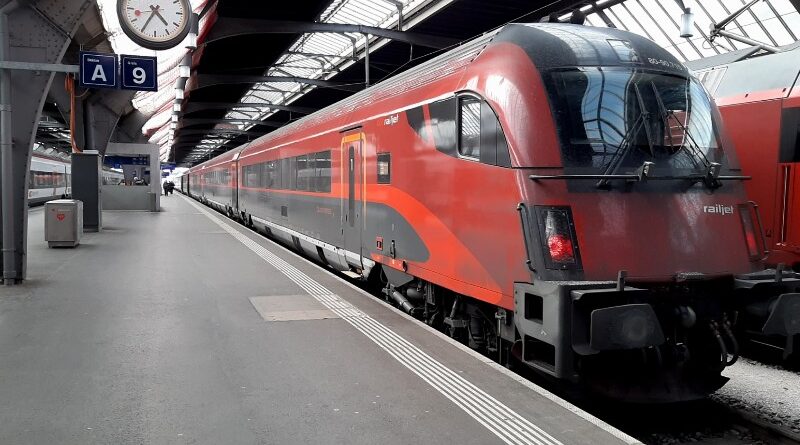
The flagship of the ÖBB fleet is the Railjet. Unlike many high-speed trains that use fixed-car shipsets (like the French TGV), the Railjet is a versatile “push-pull” locomotive-led train capable of speeds up to 230 km/h.
The Onboard Experience
Traveling on a Railjet is often described as “Business Class on tracks.” The trains are divided into three distinct classes:
- Economy Class: Offers ergonomic seating, ample luggage space, and free high-speed Wi-Fi.
- First Class: Features leather seating, more legroom, and at-seat meal service from the onboard restaurant.
- Business Class: The pinnacle of European rail luxury. For a small supplement over First Class, passengers enjoy individual semi-private compartments, fully reclining leather chairs, and a complimentary welcome drink.
The Railjet Express (RJX)
To further optimize travel times, ÖBB introduced the Railjet Express (RJX). These services skip smaller stations to connect major hubs like Vienna and Salzburg in just 2 hours and 22 minutes, directly competing with short-haul flights and car travel.
3. The Nightjet: Resurrecting the Magic of Sleeper Trains
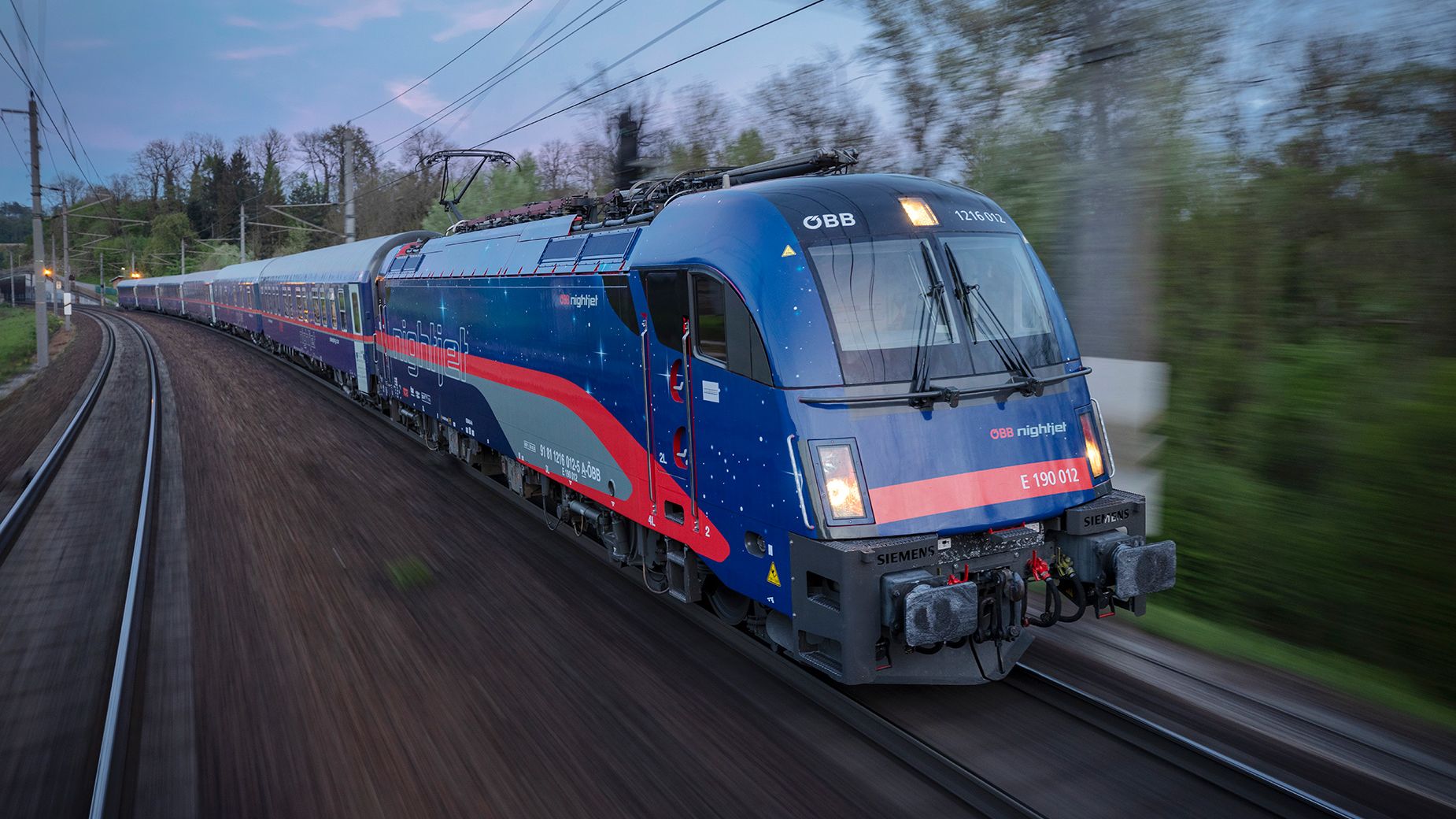
While many European nations abandoned night trains in the 2010s, ÖBB doubled down. Their Nightjet brand has single-handedly saved the European sleeper train market.
Why Nightjet?
The Nightjet allows travelers to fall asleep in Vienna or Munich and wake up in Paris, Amsterdam, Rome, or Zurich. By 2025, ÖBB has rolled out its “Next Generation” Nightjet fleet. These new trains feature:
- Mini Cabins: Individual sleeping pods for solo travelers, providing privacy and security at an affordable price.
- Modern Sleeper Cabins: Featuring en-suite toilets and showers.
- Sustainable Logistics: Using one Nightjet journey instead of a flight reduces CO2 emissions by up to 30 times.
For the modern eco-conscious traveler, the ÖBB Nightjet booking portal has become the primary tool for navigating the continent without the hassle of airport security.
4. Engineering Marvels: The Alpine Infrastructure
Austria’s geography is its greatest challenge. To maintain high speeds through the Alps, ÖBB-Infrastruktur is currently executing some of the most ambitious engineering projects in the world.
The Koralm Railway and Semmering Base Tunnel
The “Southern Route” (Südbahn) is currently being transformed. The Koralm Railway, featuring a 33km tunnel, will soon reduce the travel time between Graz and Klagenfurt from three hours to just 45 minutes. Similarly, the Semmering Base Tunnel will eliminate the need for heavy trains to navigate steep mountain grades, allowing for longer, faster freight and passenger services between Vienna and the Adriatic coast.
5. 100% Green: Sustainability at the Core
ÖBB is one of the greenest companies in Europe. Since 2018, the railway has operated its entire traction network on 100% renewable energy.
How It Works
- Hydroelectric Power: ÖBB operates eight of its own hydroelectric power plants and one solar power plant specifically designed to generate the 16.7 Hz frequency required for the rail grid.
- Wind and Solar: The company continues to expand its “Railway Solar” initiatives, installing photovoltaic panels on noise barriers and station roofs.
- The “Circular” Freight Model: Through the Rail Cargo Group, ÖBB prevents millions of truck journeys every year, significantly lowering the national carbon footprint of Austria’s industrial sector.
6. Digital Innovation: The ÖBB App and Ticketing
Navigating a foreign rail system can be daunting, but the ÖBB App (ÖBB Ticket) is widely regarded as one of the most intuitive travel apps in Europe.
Key Features for Travelers:
- Sparschiene Tickets: These are heavily discounted, non-refundable tickets for those who book in advance. You can travel from Vienna to Budapest or Prague for as little as €19.
- Intermodal Routing: The app doesn’t just show trains; it integrates the ÖBB Postbus, city trams, and even “Rail&Drive” car-sharing options.
- SimplyGo!: A recent innovation where passengers can “swipe” to start their journey and “swipe” to end it. The app calculates the cheapest fare automatically using GPS tracking.
7. A Guide for International Travelers
If you are planning a trip to Austria in 2025, here are the essential tips for using ÖBB:
The KlimaTicket
If you are staying in Austria for an extended period, look into the KlimaTicket (Climate Ticket). For a fixed annual fee, it allows unlimited travel on all public transport buses, trains, and trams—across the entire country.
Seat Reservations
While reservations are not mandatory on most domestic Austrian trains, they are highly recommended on the Vienna–Salzburg–Innsbruck corridor and for all international Railjets. During peak ski season or summer holidays, trains can reach 100% capacity.
Accessibility
ÖBB has made massive strides in “Barrierefrei” (barrier-free) travel. Most stations are equipped with tactile paving and elevators, and the newer Cityjet and Railjet trains feature low-floor boarding or integrated lifts for wheelchair users.
8. The Economic Impact of Rail Cargo Group
Rail isn’t just about moving people; it’s about moving the economy. Rail Cargo Group (RCG) acts as the logistical lungs of Central Europe. By connecting the North Sea ports (like Hamburg) to the Adriatic (Trieste) and stretching as far as the New Silk Road into Asia, RCG ensures that Austrian timber, steel, and manufactured goods reach global markets efficiently.
In 2025, RCG is focusing on “TransFER” connections fixed-schedule freight routes that offer the reliability of a passenger timetable for industrial shipping.
9. Why ÖBB Represents the Future
The Austrian Federal Railways (ÖBB) serves as a blueprint for how a nationalized entity can remain competitive, innovative, and essential in the 21st century. By prioritizing the passenger experience through brands like Nightjet and Railjet, and committing to 100% renewable energy, ÖBB has transcended its role as a mere carrier.
As Europe moves toward its goal of climate neutrality, the tracks laid by ÖBB provide the path forward. Whether you are gliding through the Tyrolean Alps or crossing the border into Italy, a journey with ÖBB is a journey into a cleaner, more connected world.
Summary Table for Travelers
| Feature | Details |
|---|---|
| Primary Website | oebb.at |
| Main High-Speed Train | Railjet (230 km/h) |
| Eco-Credentials | 100% Green Electricity |
| Top Destination Hub | Vienna Central Station (Wien Hauptbahnhof) |
| Discount Fare Name | Sparschiene |
| App Name | ÖBB Ticket / ÖBB Scotty |
Frequently Asked Questions (FAQ)
1. How can I get the cheapest tickets on ÖBB?
The most affordable fares are Sparschiene tickets, which are available for early bird bookings on the official website or the ÖBB App. Prices are dynamic, meaning they increase as the departure date approaches. Standard tickets also offer a tiered pricing system where booking 180 to 15 days in advance provides the best value.
2. Is Wi-Fi available on all ÖBB trains?
Free high-speed Wi-Fi and the “Railnet” entertainment portal are standard on all Railjet trains and newer regional Cityjets. On Nightjet services, Wi-Fi is currently only available on the “New Generation” fleet; older sleeper carriages do not yet offer this service.
3. Do I need a seat reservation for travel within Austria?
Seat reservations are generally not mandatory for most domestic daytime trains (Railjet, IC, EC), though they are highly recommended during peak hours. However, for all Nightjet (overnight) services and some international routes (especially those entering Germany or Italy), a reservation is compulsory.
4. What is the baggage policy on ÖBB trains?
You can take luggage on board free of charge, provided it fits in the racks above or below your seat or in designated luggage areas. Items should generally not exceed 90 cm x 60 cm x 40 cm. For bulky items like skis, Railjet trains feature dedicated storage racks.
5. Can I travel with my pet?
- Small animals: Harmless animals in a secure, closed container (max 90x60x40 cm) travel for free.
- Larger dogs: Dogs that do not fit in a container require a separate ticket (usually a flat fee or percentage of the fare) and must be on a leash and wear a muzzle.
- Nightjet: You may only bring a dog on a night train if you book an entire compartment for yourself/your group.
- Assistance dogs: Certified assistance dogs travel for free and do not require a muzzle.
6. Can I take my bicycle on the train?
Bicycle transport is possible but requires a specific bike ticket and, on long-distance trains (Railjet, IC, EC), a mandatory reservation due to limited space. On regional trains (S-Bahn, R, REX), bikes are permitted without a reservation if space is available.
7. What happens if my train is delayed or cancelled?
ÖBB provides real-time updates through the SCOTTY journey planner. Depending on the length of the delay and the type of ticket, you may be entitled to a partial refund (compensation for delay) or be rebooked on the next available connection free of charge. Standard tickets are generally more flexible and valid for two days within Austria.






 – The Future of European Rail)