

Bridging Continents: How the SoutH2 Corridor is Rewiring Austria’s Energy Future
Europe’s ambition to construct a continent-wide hydrogen network moved a significant step forward today, January 8, 2026, as Austria, Germany, and Italy reaffirmed their political commitment to the SoutH2 Corridor. This massive hydrogen backbone, designed to link the renewable energy potential of North Africa with the industrial heartlands of Central Europe, has officially transitioned from a strategic concept into a coordinated implementation phase.
The agreement, confirmed by Austria’s Ministry of Climate Action (BMK), builds on a series of joint declarations and marks a critical milestone in European energy diplomacy. While the accord is not yet a binding construction treaty, it strengthens the trilateral cooperation on regulatory alignment, infrastructure planning, and the cross-border market integration necessary for large-scale hydrogen transport.
Austrian Climate and Energy Minister Leonore Gewessler described the corridor as a cornerstone of the long-term energy transition. During a briefing in Vienna, she emphasized its dual role in reducing dependency on fossil fuel imports while safeguarding the industrial competitiveness of the Alpine republic.
A Backbone Connecting Continents
The SoutH2 Corridor is envisioned as a 3,300-kilometer hydrogen transport network extending from the renewable-rich regions of Algeria and Tunisia, through southern Italy, across Austria, and onward to the manufacturing hubs of southern Germany. The project is currently recognized as a “Project of Common Interest” (PCI) under EU energy infrastructure rules, granting it priority status for planning and potential funding.
A substantial portion of the corridor is set to be developed through the repurposing of existing natural gas pipelines. According to recent feasibility studies, this approach could reduce costs and environmental impact by up to 60% compared to new construction. Long-term projections suggest the corridor could eventually transport several million tonnes of renewable hydrogen annually, a vital component in meeting the EU’s ambitious REPowerEU targets.
Geopolitics and the CBAM Factor
The renewed momentum around the corridor is inseparable from the broader reshaping of the global trade landscape. This week’s official entry into the enforcement phase of the Carbon Border Adjustment Mechanism (CBAM) has placed immense pressure on energy-intensive industries to decarbonize. For European steel and chemical producers, access to low-carbon hydrogen is no longer a luxury—it is a strategic necessity for remaining competitive under new carbon tariffs.
European policymakers view the SoutH2 Corridor as a way to diversify supply routes and reduce exposure to geopolitical shocks. While some international trade partners have voiced concerns regarding the EU’s climate-linked trade measures, Brussels maintains that hydrogen imports produced under transparent environmental standards are the only path to a fair global transition.
Austria’s Strategic Pivot
Austria occupies a central geographic and logistical position within the proposed corridor. Existing pipeline systems—including sections of the TAG and WAG networks—are expected to serve as the vital link between Italian entry points and German demand.
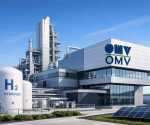
For domestic energy giants like OMV and Gas Connect Austria, the corridor provides long-term planning certainty. It also perfectly complements the recently confirmed government support for green hydrogen projects in Lower Austria, where a new 140 MW facility is set to become a regional production hub. This “dual-track” strategy—investing in both domestic production and international transit—ensures Austria remains an energy hub for the 21st century.
Economic Aspirations and Social Realities
The development of this hydrogen infrastructure is expected to generate thousands of skilled jobs across Austria over the next decade. However, analysts at The Vienna Times note that these massive industrial investments arrive amidst a period of domestic social tension. While billions are being funneled into future energy grids, workforce pressures in other sectors most notably the healthcare industry—have led to scheduled warning strikes later this month.
The success of the hydrogen transition will ultimately depend not just on pipes and compressors, but on the government’s ability to balance industrial ambition with social stability and public trust.
A Project in Motion
As technical standards and financing instruments continue to be refined in cooperation with the European Investment Bank and private partners, the strategic direction is clear. For Austria, Germany, and Italy, hydrogen is no longer a distant aspiration, but the central pillar of a resilient, interconnected Europe.