

Franz Joseph I: The Emperor Who Ruled Austria for 68 Years
Franz Joseph I was one of the longest-reigning monarchs in European history, ruling the Austrian Empire and later Austria–Hungary for an extraordinary 68 years, from 1848 to 1916. His reign spanned revolutions, wars, industrialization, and the slow decline of imperial Europe. While history often remembers him as a rigid and duty-bound ruler, his personal life—especially his marriage to Empress Elisabeth of Austria (Sisi) reveals a far more complex and tragic figure.
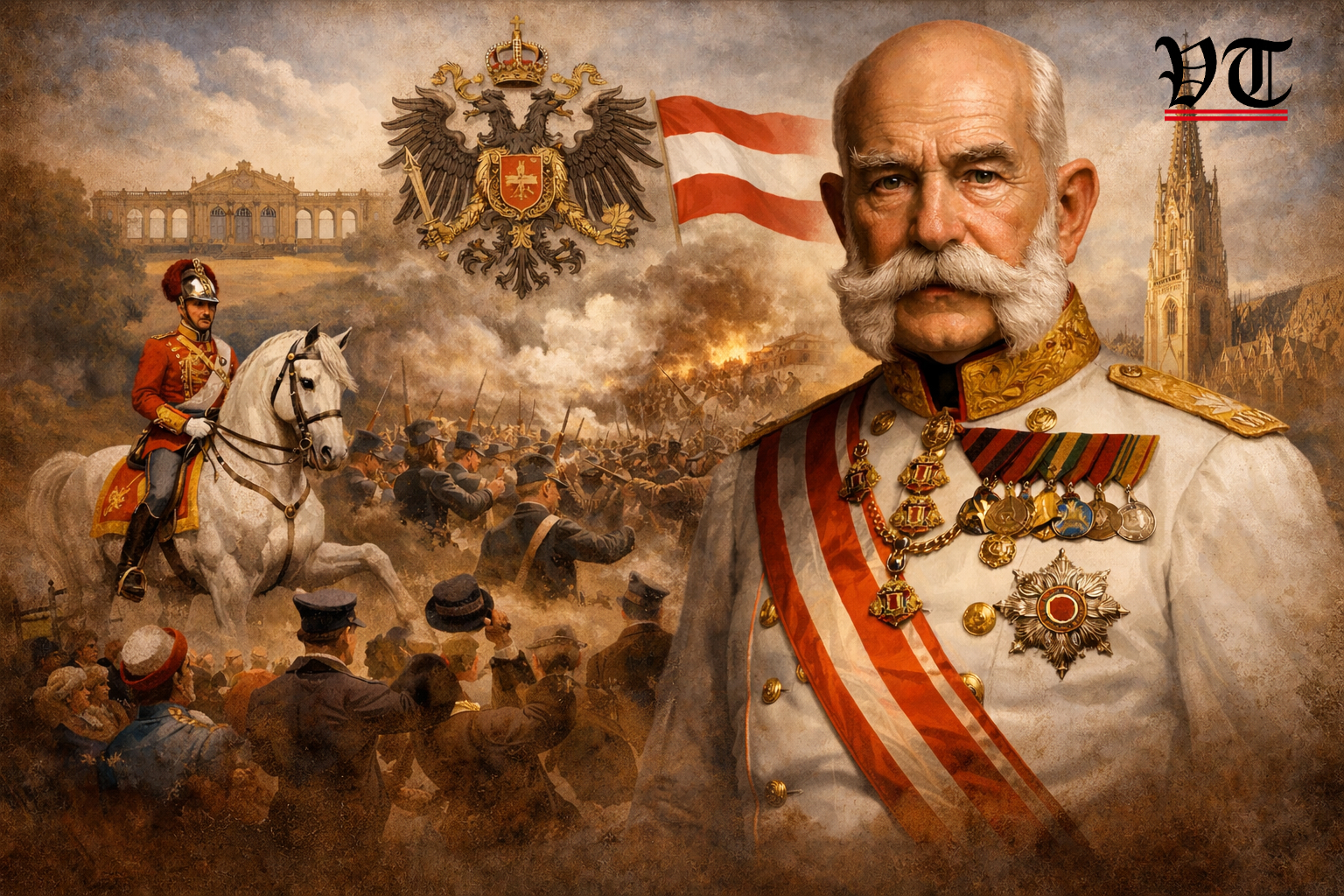
This is the story of Emperor Franz Joseph I, the man who embodied the rise and fall of the Habsburg world.
Early Life and Ascension to the Throne
Franz Joseph Karl was born on August 18, 1830, in Vienna, into the powerful House of Habsburg. From an early age, he was groomed for leadership under strict military discipline and conservative values. Duty, obedience, and loyalty to the monarchy were drilled into him relentlessly.
At just 18 years old, amid the Revolutions of 1848, Franz Joseph ascended the throne after his uncle, Emperor Ferdinand I, abdicated. Europe was in chaos—liberal movements, nationalist uprisings, and calls for constitutional rule threatened old monarchies everywhere.
Franz Joseph came to power determined to preserve absolute monarchy, believing that the empire’s survival depended on order, tradition, and centralized authority.
A Ruler Shaped by Duty, Not Emotion
Unlike many charismatic rulers, Franz Joseph was known for his cold discipline and tireless work ethic rather than charm. He worked long hours, followed strict routines, and expected unwavering loyalty from his officials and family.
He believed deeply in:
- Absolute monarchy
- Military strength
- Divine right to rule
This rigid mindset helped him maintain control but it also made him slow to adapt to a rapidly changing Europe. Over time, this inflexibility would cost the empire dearly.
Marriage to Empress Elisabeth of Austria (Sisi)
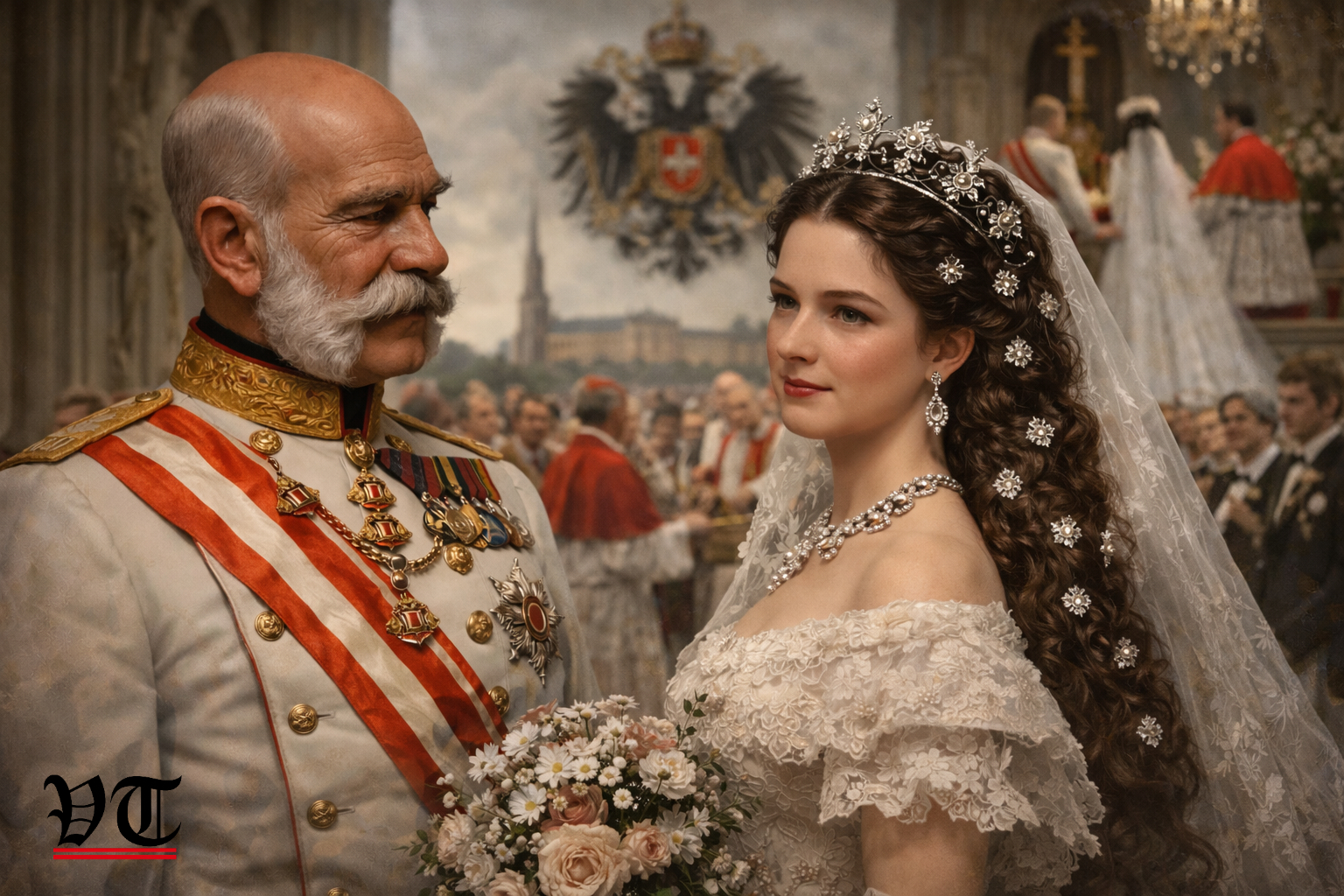
In 1854, Franz Joseph married Elisabeth of Bavaria, later known as Empress Elisabeth of Austria. The marriage was unusual by royal standards—Franz Joseph married for love, rejecting the politically arranged match planned by his family.
At first, he adored Elisabeth completely. However, the realities of court life soon strained their relationship.
A Marriage of Love and Distance
- Franz Joseph embraced imperial duty
- Elisabeth craved freedom and independence
- His mother, Archduchess Sophie, dominated court life
- Elisabeth felt isolated and emotionally suffocated
While Franz Joseph remained devoted to his wife, he failed to protect her from the oppressive court environment. Over time, Elisabeth withdrew, traveling constantly and avoiding Vienna, leaving Franz Joseph increasingly alone.
Family Tragedies That Haunted the Emperor
Franz Joseph’s reign was marked by personal tragedies that deeply affected him.
Death of His Son: Crown Prince Rudolf
In 1889, his only son and heir, Crown Prince Rudolf, died in the infamous Mayerling Incident. Officially declared a murder-suicide, the event shocked Europe and devastated the emperor.
Rudolf’s death:
- Ended hopes for a liberal successor
- Left Franz Joseph emotionally broken
- Pushed Elisabeth into permanent mourning
Assassination of Empress Elisabeth
In 1898, Franz Joseph suffered another devastating blow when Empress Elisabeth was assassinated in Geneva by an Italian anarchist.
Despite their emotional distance, Franz Joseph loved Elisabeth deeply. Her death left him isolated, aging, and increasingly resigned to fate.
Military Conflicts and Political Failures
Franz Joseph’s long reign included several major military and political setbacks.
Key Conflicts
- Italian Wars of Independence – Loss of influence in Italy
- Austro-Prussian War (1866) – Crushing defeat by Prussia
- Loss of dominance in German affairs
These defeats weakened Austria’s position in Europe and forced Franz Joseph to reconsider his centralized rule.
The Austro-Hungarian Compromise of 1867
One of Franz Joseph’s most important decisions was agreeing to the Austro-Hungarian Compromise of 1867, which transformed the Austrian Empire into the Dual Monarchy of Austria-Hungary.
Under this system:
- Austria and Hungary became equal partners
- Franz Joseph ruled as Emperor of Austria and King of Hungary
- Each had its own parliament but shared military and foreign policy
This compromise stabilized the empire temporarily and was strongly supported by Empress Elisabeth, who sympathized with Hungarian aspirations.
A Lonely Emperor in His Final Years
As Franz Joseph aged, he became a symbol of an era fading into history. By the early 20th century:
- Nationalism threatened the empire
- Industrialization changed society
- Younger generations questioned monarchy
The outbreak of World War I in 1914 marked the final chapter of his reign. Though aging and weary, Franz Joseph approved military action following the assassination of Archduke Franz Ferdinand—a decision that would plunge Europe into catastrophe.
He did not live to see the empire’s collapse.
Death and the End of an Era
Franz Joseph I died on November 21, 1916, at the age of 86, after nearly seven decades on the throne. His death symbolized the end of old imperial Europe.
Just two years later, Austria-Hungary collapsed, marking the final dissolution of Habsburg power.
Legacy of Franz Joseph I
Franz Joseph remains one of history’s most paradoxical rulers:
Strengths
- Unmatched dedication to duty
- Political endurance
- Administrative discipline
Weaknesses
- Resistance to reform
- Emotional detachment
- Failure to address nationalism
He was not a visionary but he was a survivor. His reign preserved the empire longer than many believed possible, even as the world changed around him.
Franz Joseph I in History
Today, Franz Joseph I is remembered as:
- The longest-reigning Habsburg emperor
- Husband of Empress Elisabeth (Sisi)
- A ruler trapped between tradition and modernity
His life story is inseparable from the fate of Empress Elisabeth of Austria and the decline of the Habsburg Empire.
Frequently Asked Questions (FAQ)
Who was Franz Joseph I?
Franz Joseph I was the Emperor of Austria and later Austria-Hungary, ruling from 1848 until 1916. He was one of the longest-reigning monarchs in European history and a central figure in the Habsburg dynasty.
How long did Franz Joseph I rule Austria?
Franz Joseph I ruled for 68 years, from 1848 to 1916, making him one of the longest-serving emperors in Europe.
Was Franz Joseph I married to Empress Elisabeth of Austria?
Yes, he was married to Empress Elisabeth of Austria, widely known as Sisi. Their marriage began as a love match but later became strained due to rigid court life and personal tragedies.
What was Franz Joseph I’s role in Austria-Hungary?
After the Austro-Hungarian Compromise of 1867, Franz Joseph became both Emperor of Austria and King of Hungary, ruling the Dual Monarchy until his death.
What happened to Crown Prince Rudolf?
Crown Prince Rudolf, the only son of Franz Joseph I, died in 1889 during the mysterious Mayerling Incident, an event that deeply affected the emperor and the future of the empire.
Did Franz Joseph I cause World War I?
Franz Joseph I approved military action following the assassination of Archduke Franz Ferdinand in 1914, a decision that contributed to the outbreak of World War I, though broader political tensions were already present.
When did Franz Joseph I die?
Franz Joseph I died on November 21, 1916, during World War I. He did not live to see the collapse of Austria-Hungary in 1918.
Why is Franz Joseph I historically important?
He symbolizes the endurance and eventual decline of imperial Europe, ruling through revolutions, wars, and social change while maintaining the Habsburg monarchy longer than expected.