

EU Warns Retaliation After US Bars 5 Officials Over “Censorship”
EU Threatens “Decisive” Retaliation After US Bars 5 Europeans in Censorship Row
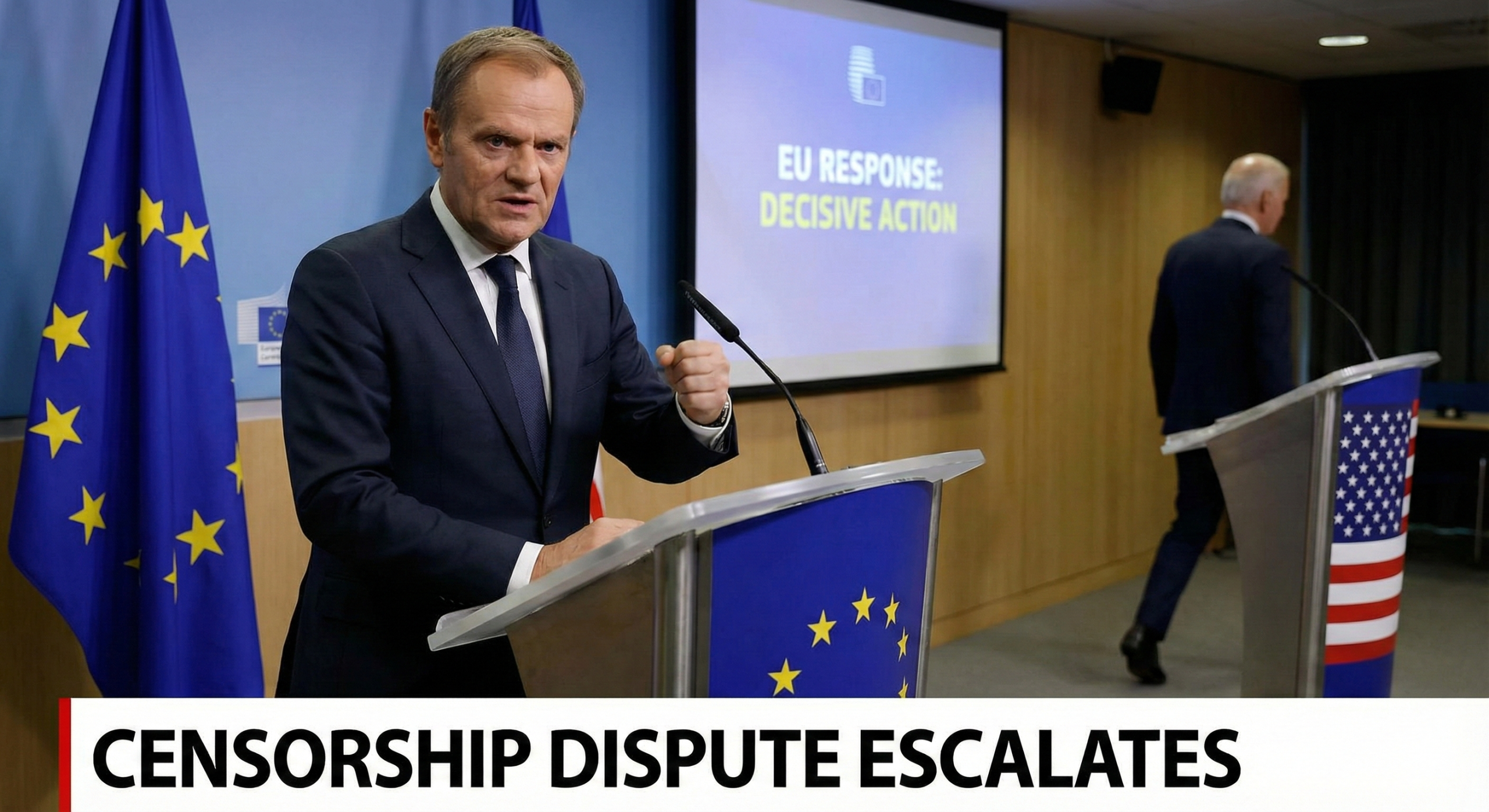
The European Commission has warned it will respond “swiftly and decisively” after the United States imposed visa bans on five prominent European figures. The Trump administration accuses the group—which includes former EU Commissioner Thierry Breton—of orchestrating a campaign to “coerce” American tech platforms into censoring conservative viewpoints.
Who Are the “Barred Five”?
The U.S. State Department, led by Secretary of State Marco Rubio, identified the following individuals as “radical activists” and leaders of “weaponized” NGOs:
- Thierry Breton: Former EU Internal Market Commissioner and architect of the Digital Services Act (DSA).
- Imran Ahmed: CEO of the Center for Countering Digital Hate (CCDH).
- Clare Melford: CEO of the Global Disinformation Index.
- Josephine Ballon: Co-CEO of HateAid (Germany).
- Anna-Lena von Hodenberg: Co-CEO of HateAid (Germany).
The “Censorship” Accusation
Secretary Rubio stated that for too long, European “ideologues” have used regulatory threats to punish American speech they oppose. The move follows high-profile clashes between Thierry Breton and tech billionaire Elon Musk, particularly over the EU’s enforcement of the Digital Services Act (DSA).
“The Trump Administration will no longer tolerate these egregious acts of extraterritorial censorship,” Rubio posted on X.
EU and Member States Respond
The reaction from Europe was immediate and sharp. The European Commission stated it has requested “clarification” from Washington and is prepared to defend its regulatory sovereignty.
- France: President Emmanuel Macron called the move “intimidation and coercion” aimed at undermining European digital laws.
- Germany: The Justice Ministry termed the bans “unacceptable,” asserting that European digital rules are not decided in Washington.
- United Kingdom: While acknowledging visa sovereignty, the UK government reiterated its commitment to keeping the internet free from “harmful content”.
The Impact on Transatlantic Relations
The row signals a deepening divide between the U.S. and its closest allies over the balance between free speech and online safety. By using immigration law instead of traditional sanctions, the U.S. has introduced a new, personal cost for European regulators and NGO leaders.