


Chinese EV Makers Target Europe as Competition Heats Up
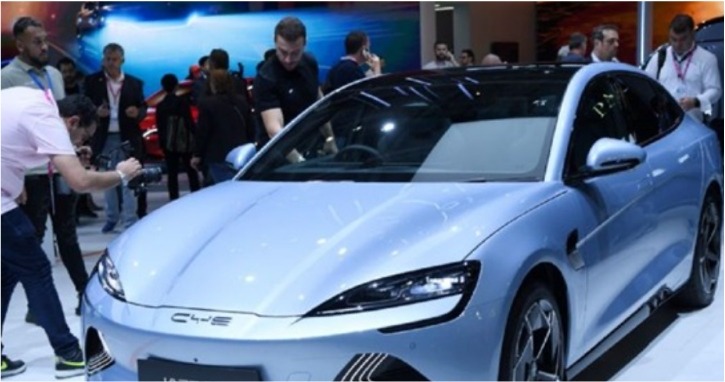
Chinese electric vehicle (EV) makers are aggressively targeting Europe’s EV market, which saw a 55% sales increase in the first seven months of 2023, reaching approximately 820,000 vehicles and comprising 13% of total car sales. Companies like BYD, Nio, and Xpeng are expanding their presence in Europe, with Xpeng planning further market expansion in 2024 and Zhejiang Leapmotor Technology announcing five new models for overseas markets, including Europe.
Data from auto consultancy Inovev reveals that Chinese brands accounted for 8% of new EVs sold in Europe this year, up from 6% in 2022 and 4% in 2021. The influx of Chinese EV makers has raised concerns in Germany, with the president of the German Association of the Automotive Industry, Hildegard Mueller, stating that Germany is losing its competitiveness and emphasizing the need for increased investment in electrification.
Chinese EVs have a price advantage, with the average cost of an EV in China being less than €32,000 ($35,000) in the first half of 2022, compared to approximately €56,000 in Europe. European automakers are striving to compete by reducing production costs and enhancing range and efficiency. Mercedes-Benz and BMW are launching new models targeting cost-efficiency, while Volkswagen aims to reduce battery cell costs by 50% through its Chinese partnerships.
Xpeng President Brian Gu acknowledged that European carmakers are currently behind China in the EV market but highlighted their substantial commitments to EVs through partnerships and technology investments. However, he noted that Chinese companies are highly proficient at battery production, where costs can account for up to 40% of an EV’s total cost.
Auto industry analyst Ferdinand Dudenhoeffer stressed the importance of Chinese battery makers setting up in Germany to reduce EV costs. He cautioned against strategies that might drive them away, highlighting the need for cooperation between Chinese battery companies and German policymakers.
The aggressive expansion of Chinese EV makers in Europe has intensified competition in the EV market and pushed European automakers to enhance their offerings and reduce costs to remain competitive. The future of the EV market in Europe will likely see increased rivalry between Chinese and European manufacturers.





[…] captured 8% of the European EV market in 2023, up from 6% in 2022 and 4% in 2021. This influx of Chinese EV makers has prompted concerns in Germany. Hildegard Mueller, president of the German Association of the […]
[…] from auto consultancy Inovev underscores the success of Chinese EV brands in Europe. In 2023, these companies have captured a significant 8% share of the European EV market, a notable […]